Cara Membaca Minimap MLBB: Panduan Map Awareness untuk Pemula
Di Halaman Ini16
- 01Apa Itu Minimap?
- 02Anatomi Minimap MLBB
- 031. Base
- 042. Tiga Lane
- 053. Jungle
- 064. River dan Objective
- 075. Bush
- 08Membaca Warna dan Ikon di Minimap
- 09Apa Itu MIA?
- 10Cara Membaca Bahaya dari Minimap
- 11Membaca Objective: Turtle dan Lord
- 12Kebiasaan Map Awareness untuk Pemula
- 13Fokus Minimap Berdasarkan Role
- 14Kesalahan Umum Saat Membaca Minimap
- 15Latihan Sederhana
- 16Kesimpulan
Banyak pemain Mobile Legends terlalu fokus ke hero yang sedang dikendalikan, sampai lupa melihat minimap di sudut layar. Padahal, minimap adalah salah satu sumber informasi paling penting di dalam game.
Dari minimap, kamu bisa tahu posisi rekan tim, posisi musuh yang terlihat, turret yang masih berdiri, arah rotasi lawan, serta peluang untuk mengambil objective seperti Turtle dan Lord. Pemain yang terbiasa membaca minimap biasanya lebih sulit terkena gank, lebih tahu kapan harus mundur, dan lebih cepat merespons pergerakan lawan.
Artikel ini membahas cara membaca minimap dari dasar, dengan fokus untuk pemain pemula yang ingin meningkatkan map awareness.
Catatan review (13 Agustus 2026): efek buff, waktu objective, dan lokasi objective dapat berubah antarpatch. Gunakan artikel ini untuk memahami cara mengambil keputusan, lalu pastikan timer, ikon, dan deskripsi terbaru langsung di dalam game setiap pertandingan.
Apa Itu Minimap?
Minimap adalah peta kecil yang menampilkan gambaran besar arena pertandingan. Di minimap, kamu bisa melihat:
- posisi hero tim sendiri,
- posisi musuh yang sedang terlihat,
- posisi minion,
- turret yang masih berdiri,
- area lane dan jungle,
- serta objective besar seperti Turtle dan Lord.
Kemampuan membaca informasi dari minimap disebut map awareness. Semakin baik map awareness kamu, semakin mudah kamu mengambil keputusan: kapan aman farming, kapan harus mundur, kapan bantu teamfight, dan kapan ikut mengambil objective.
Tanpa map awareness, kamu seperti bermain dengan informasi yang sangat terbatas. Kamu mungkin merasa aman saat push lane, padahal tiga hero musuh sedang menghilang dari map dan bergerak ke arahmu.
Anatomi Minimap MLBB
Sebelum bisa membaca minimap dengan benar, kamu perlu memahami bagian-bagian utama map.
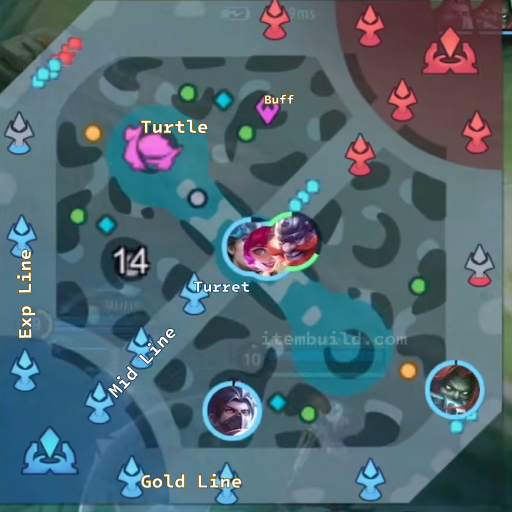
1. Base
Base adalah bangunan utama yang harus dilindungi. Tujuan akhir permainan adalah menghancurkan base musuh.
Pada tampilan standar, base timmu biasanya ditampilkan di sisi bawah/kiri, sedangkan base musuh di sisi atas/kanan. Namun yang paling penting bukan arah map-nya, melainkan warna dan ikon: ikuti ikon timmu, ikon musuh, dan jalur minion untuk membaca situasi.
2. Tiga Lane
Mobile Legends memiliki tiga lane utama:
EXP Lane
EXP Lane adalah lane yang memberi bonus EXP dari minion pada fase awal game. Lane ini biasanya diisi oleh fighter atau hero solo laner yang butuh cepat naik level.
EXP Lane penting karena pemainnya sering harus memilih antara menjaga lane, rotasi, atau bersiap menuju objective besar pertama. Jangan menghafal sisi objective: lihat ikon dan timer objective di minimap untuk mengetahui lokasinya pada pertandingan saat ini.
Mid Lane
Mid Lane adalah lane tengah. Karena posisinya berada di tengah map, mid laner biasanya lebih mudah rotasi ke lane lain, membantu jungler, atau ikut membuka area objective.
Hero mid lane biasanya punya kemampuan clear wave cepat, poke, burst, atau crowd control agar bisa membantu tempo permainan tim.
Gold Lane
Gold Lane adalah lane yang memberi bonus gold dari minion pada fase awal game. Lane ini biasanya diisi oleh marksman atau damage dealer yang membutuhkan item.
Karena gold laner biasanya masih lemah di early game dan butuh farming, pemain Gold Lane perlu sering melihat minimap sebelum push atau rotasi. Objective aktif dapat menarik beberapa musuh ke satu sisi map, jadi gunakan ikon dan timernya daripada menganggap satu lane selalu lebih aman.
3. Jungle
Jungle adalah area di antara lane yang berisi monster jungle. Monster jungle memberi gold, EXP, dan beberapa buff penting.
Dua buff utama yang sering disebut pemain adalah:
- Purple Buff / Blue Buff: umumnya membantu hero yang sangat bergantung pada skill atau sumber daya.
- Orange Buff / Red Buff: umumnya meningkatkan tekanan hero saat menyerang musuh.
Efek detail kedua buff dapat berubah, jadi cek deskripsi terbaru di dalam game dan jangan hanya mengandalkan angka atau nama dari patch lama.
Jungle biasanya difarming oleh jungler, terutama hero yang membawa spell Retribution. Pemain lain sebaiknya tidak sembarangan mengambil buff jungler sendiri, terutama di early game, karena bisa mengganggu tempo farming dan level jungler.
4. River dan Objective
River adalah area tengah yang menghubungkan sisi atas dan bawah map. Area ini penting karena sering menjadi jalur rotasi, tempat berebut vision, dan area sekitar objective besar.
Objective utama yang perlu diperhatikan:
- Turtle: objective besar pada fase awal yang dapat memberi keuntungan sumber daya bagi tim yang mengamankannya.
- Lord: objective besar pada fase berikutnya yang membantu tim menekan lane, turret, dan base lawan.
Lihat ikon dan timer objective di minimap untuk mengetahui waktu muncul dan lokasinya pada pertandingan saat ini. Jangan menganggap Turtle atau Lord selalu berada di sisi lane tertentu, atau memakai menit tetap dari patch lama sebagai patokan rotasi.
5. Bush
Bush adalah semak-semak tempat hero bisa bersembunyi. Hero yang berada di dalam bush tidak terlihat oleh lawan, kecuali area tersebut sedang terbuka oleh vision tim lawan.
Vision bisa berasal dari hero, minion, turret, atau skill/trap tertentu. Karena itu, bush di sekitar Turtle, Lord, jungle, dan lane sangat penting untuk dikontrol.
Banyak gank terjadi karena pemain maju terlalu jauh tanpa tahu apakah bush di dekatnya aman atau tidak.
Membaca Warna dan Ikon di Minimap
Aturan dasarnya sederhana:
- Ikon tim sendiri menunjukkan posisi rekan satu tim.
- Ikon musuh hanya muncul jika musuh sedang terlihat oleh timmu.
- Turret menunjukkan struktur yang masih berdiri.
- Ikon Turtle/Lord menunjukkan objective besar yang sedang tersedia atau akan muncul.
Hal paling penting: musuh yang tidak terlihat bukan berarti tidak ada.
Musuh hanya muncul di minimap jika masuk area vision timmu, misalnya dekat hero, minion, turret, atau terkena skill/trap yang membuka posisi. Jika musuh masuk bush, mundur ke fog of war, atau menjauh dari vision timmu, ikonnya bisa hilang dari minimap.
Ketika ikon musuh hilang, kamu harus mulai bertanya:
- Musuh sedang recall?
- Musuh sedang farming jungle?
- Musuh sedang rotasi ke lane lain?
- Musuh sedang menunggu di bush?
- Musuh sedang menuju Turtle atau Lord?
Pertanyaan seperti ini membantu kamu bermain lebih aman.
Apa Itu MIA?
MIA adalah singkatan dari Missing In Action. Dalam konteks MLBB, MIA berarti hero musuh sedang tidak terlihat di minimap.
Musuh yang MIA bisa saja:
- rotasi untuk meng-gank lane lain,
- bersembunyi di bush,
- mengambil buff atau monster jungle,
- bersiap merebut Turtle/Lord,
- recall ke base,
- atau sedang menunggu momen untuk flank saat teamfight.
Karena itu, jangan langsung panik setiap ada musuh MIA, tapi jangan juga mengabaikannya.
Kebiasaan yang bagus: setiap beberapa detik, hitung berapa ikon musuh yang terlihat. Jika hanya 3 dari 5 musuh yang terlihat, berarti 2 hero lainnya sedang MIA. Dalam kondisi seperti ini, jangan push terlalu jauh tanpa informasi tambahan.
Cara Membaca Bahaya dari Minimap
Minimap bukan hanya untuk melihat posisi. Kamu juga harus membaca pola pergerakan.
1. Banyak musuh menghilang dari map
Jika beberapa musuh tiba-tiba hilang, kemungkinan mereka sedang:
- rotasi bersama,
- menunggu di bush,
- mencari pick-off,
- atau menuju objective.
Dalam kondisi ini, kurangi risiko. Jangan sendirian masuk jungle atau push lane terlalu dalam.
2. Musuh berkumpul di satu area
Jika banyak ikon musuh berkumpul di satu titik, biasanya mereka sedang:
- push turret,
- setup Turtle/Lord,
- invade jungle,
- atau memaksa teamfight.
Ini sinyal untuk memberi ping, mundur jika kalah jumlah, atau berkumpul jika tim siap melawan.
3. Lane kosong tapi minion maju
Jika lane musuh kosong namun minion mereka tetap maju, bisa jadi hero musuh sedang rotasi. Jangan hanya melihat lane di depanmu; cek juga mid lane, jungle, dan objective terdekat.
4. Jungler musuh tidak terlihat
Jungler musuh yang hilang dari minimap harus diperhatikan, terutama menjelang Turtle atau Lord. Jika jungler musuh tidak terlihat, mereka bisa saja sedang mencari gank atau siap mencuri objective dengan Retribution.
Membaca Objective: Turtle dan Lord
Turtle dan Lord sering menentukan tempo permainan. Karena itu, jangan hanya melihat HP objective, tapi juga baca minimap sebelum memulainya.
Sebelum tim mengambil Turtle atau Lord, cek hal berikut:
-
Berapa musuh yang terlihat?
Jika banyak musuh MIA, objective lebih berisiko. -
Di mana jungler musuh?
Jika jungler musuh masih hidup dan tidak terlihat, mereka bisa datang untuk mencuri objective. -
Apakah Retribution jungler tim siap?
Objective besar lebih aman jika jungler tim punya Retribution yang tersedia. -
Apakah bush sekitar sudah aman?
Roamer atau hero yang kuat membuka area sebaiknya mengecek bush terlebih dahulu. -
Apakah lane sudah dipush?
Jika minion lane timmu sudah maju, musuh akan lebih sulit bergerak bebas karena harus membersihkan wave.
Memulai Turtle atau Lord saat beberapa musuh MIA bukan selalu salah, tapi risikonya tinggi jika tim tidak punya informasi. Untuk pemula, lebih aman ambil objective setelah musuh terlihat jauh, ada musuh yang mati, atau tim unggul jumlah.
Kebiasaan Map Awareness untuk Pemula
Map awareness bukan bakat. Ini kebiasaan yang bisa dilatih.
1. Lirik minimap setiap 3–5 detik
Jangan menunggu ada bahaya baru melihat minimap. Biasakan cek minimap saat:
- selesai menggunakan skill,
- sedang berjalan antar-lane,
- setelah clear minion,
- sebelum masuk bush,
- sebelum push turret,
- dan sebelum mengambil objective.
Saat teamfight besar, jangan menatap minimap terlalu lama. Cukup cek cepat di sela cooldown skill atau setelah posisi hero aman.
2. Cek musuh sebelum push
Sebelum mendorong lane terlalu jauh, cek dulu posisi musuh. Jika 3–4 musuh tidak terlihat, jangan over-extend.
Lebih baik kehilangan sedikit minion daripada mati sendirian dan memberi keuntungan gold ke musuh.
3. Gunakan ping
Jika musuh di lanemu menghilang, beri ping atau sinyal “Musuh hilang”. Jika kamu melihat musuh berkumpul di satu area, beri sinyal mundur atau hati-hati.
Ping sederhana bisa menyelamatkan rekan tim dari gank.
4. Jangan masuk jungle sendirian tanpa informasi
Jungle adalah area berbahaya karena banyak bush dan jalur sempit. Jika musuh banyak MIA, jangan masuk jungle sendirian, apalagi sebagai marksman atau mage yang mudah dibunuh.
5. Perhatikan objective timer
Biasakan melihat timer Turtle dan Lord. Sekitar 20–30 detik sebelum objective muncul, tim biasanya mulai bergerak untuk mengambil posisi.
Jika kamu roamer, mid laner, EXP laner, atau jungler, momen ini sangat penting untuk setup area.
Fokus Minimap Berdasarkan Role
Setiap role membaca minimap dengan fokus yang sedikit berbeda.
| Role | Fokus saat melihat minimap |
|---|---|
| Gold Laner | Cek posisi mid, roamer, dan jungler musuh sebelum maju farming atau push |
| EXP Laner | Cek timer Turtle, posisi mid lawan, dan peluang rotasi ke objective |
| Mid Laner | Cek side lane yang bisa dibantu setelah clear wave |
| Roamer | Cek musuh MIA, buka bush, beri ping, dan bantu setup Turtle/Lord |
| Jungler | Cek lane yang bisa digank, posisi jungler musuh, dan timing Turtle/Lord |
Kalau kamu masih pemula, cukup mulai dari satu kebiasaan: jangan maju kalau kamu tidak tahu posisi sebagian besar musuh.
Kesalahan Umum Saat Membaca Minimap
Berikut kesalahan yang sering dilakukan pemain pemula:
-
Hanya melihat hero sendiri.
Akibatnya telat sadar saat musuh datang dari samping. -
Tetap push walau banyak musuh MIA.
Ini sering berakhir mati karena gank. -
Tidak memberi ping saat musuh hilang.
Rekan tim bisa terkena gank karena tidak mendapat peringatan. -
Mengambil Turtle/Lord tanpa cek bush.
Musuh bisa mencuri objective atau memulai teamfight dari posisi tersembunyi. -
Masuk jungle lawan sendirian.
Tanpa vision dan backup, ini sangat berisiko.
Latihan Sederhana
Agar terbiasa membaca minimap, coba latihan ini selama beberapa game:
- Setiap selesai clear minion, lihat minimap.
- Sebelum masuk bush, lihat minimap.
- Sebelum push turret, hitung musuh yang terlihat.
- Setiap Turtle/Lord hampir muncul, lihat posisi jungler dan roamer lawan.
- Jika ada 2 atau lebih musuh MIA, main lebih aman.
Latihan ini sederhana, tapi efeknya besar. Kamu akan lebih jarang mati sia-sia dan lebih cepat membaca rencana lawan.
Kesimpulan
Minimap adalah “mata kedua” di Mobile Legends. Dari minimap, kamu bisa membaca posisi musuh, arah rotasi, potensi gank, kondisi lane, dan peluang mengambil objective.
Untuk pemula, fokuslah pada kebiasaan dasar: sering cek minimap, waspada saat musuh MIA, jangan push tanpa informasi, gunakan ping, dan perhatikan timer Turtle/Lord.
Map awareness tidak membutuhkan hero mahal atau mekanik sulit. Yang dibutuhkan adalah kebiasaan membaca informasi kecil di minimap, lalu mengambil keputusan yang lebih aman.
Setelah memahami minimap, langkah berikutnya adalah belajar memilih hero dan build yang sesuai situasi. Coba Itembuild Draft Assistant untuk rekomendasi pick, ban, dan item build berdasarkan komposisi tim.
Verifikasi & sumber
Untuk mekanik yang dapat berubah antarpatch, gunakan deskripsi terbaru di dalam game sebagai rujukan utama dan periksa kembali klien game setelah patch baru.
- Terakhir ditinjau:
- Rujukan utama:
- Deskripsi di dalam game MLBB dan materi pembaruan resmi.
Lanjut di Fundamental
Semua panduan →- Mengenal 6 Role Hero di MLBB: Fungsi, Contoh, dan Tips untuk Pemula8 menit
- Panduan Emblem dan Battle Spell MLBB: Cara Memilih Sesuai Role dan Situasi5 menit
- Sistem Gold dan EXP MLBB: Dari Mana Datangnya dan Siapa yang Berhak Mengambilnya5 menit
- Positioning dan Teamfight MLBB: Berdiri di Tempat yang Benar Saat War5 menit
- Istilah MLBB untuk Pemula: Panduan Role, Lane, Objektif, dan Strategi Dasar166 istilah